Lighthus
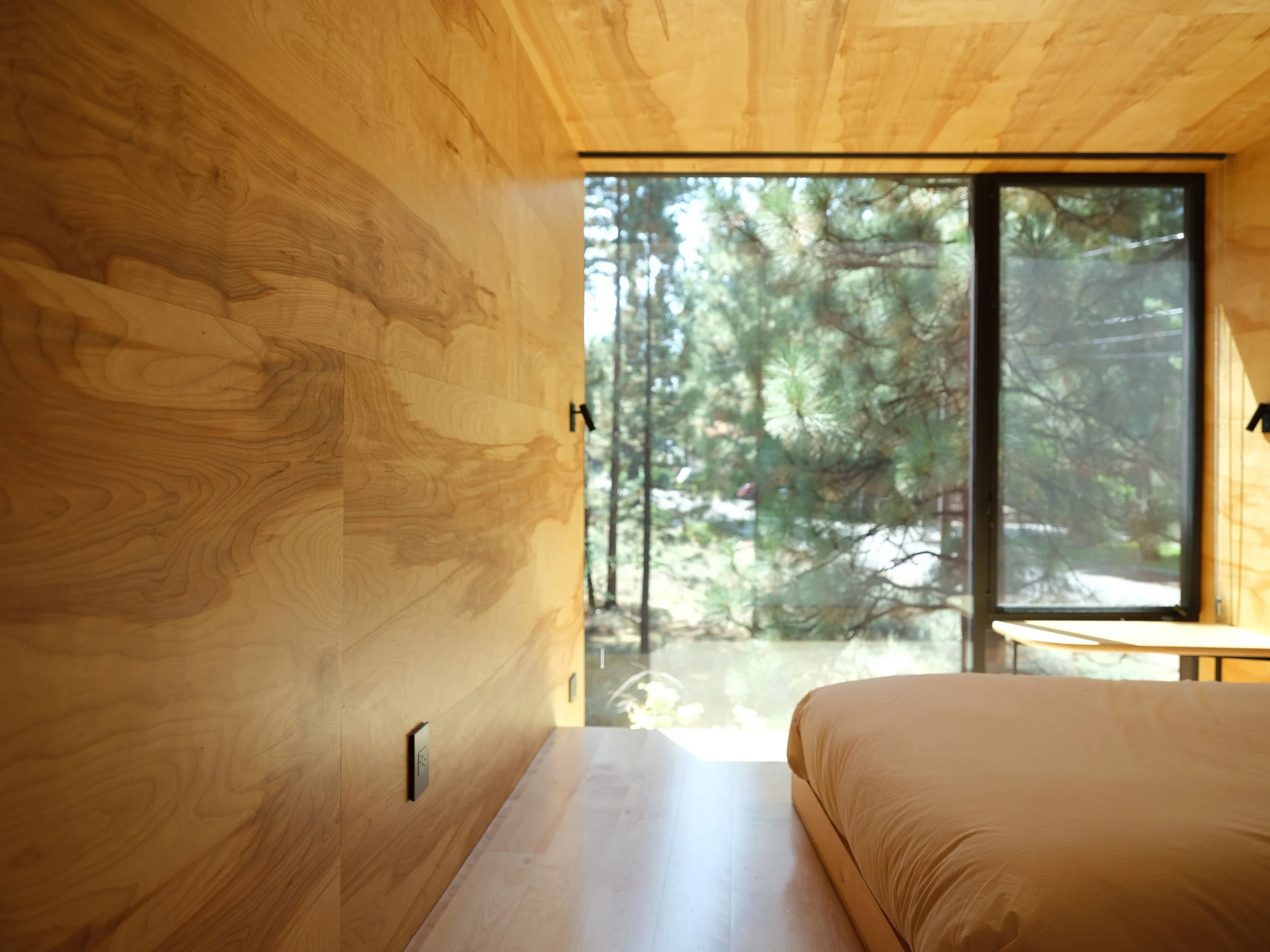
Lighthus is a retreat nestled within the forests of the Sierra Nevada, at the peripheral edge of California in South Lake Tahoe. Conceived as an escape from the efficiencies and rigidities of urban life, the house draws its sensibility from the wilderness that surrounds it.
Rather than imposing itself upon the site, the architecture weaves through the forest in a linear arrangement of spaces shaped by the existing Jeffrey Pines. In lieu of the conventional clear-cutting of a wooded lot, the trees themselves informed the footprint of the house, allowing the landscape to remain an active participant in the design.
The reflected ceiling plan serves as the project’s primary ordering device, quietly organizing the home’s program and spatial rhythm. White oak plank flooring aligns with this geometry, extending through the interior as a continuous surface that binds the spaces together.
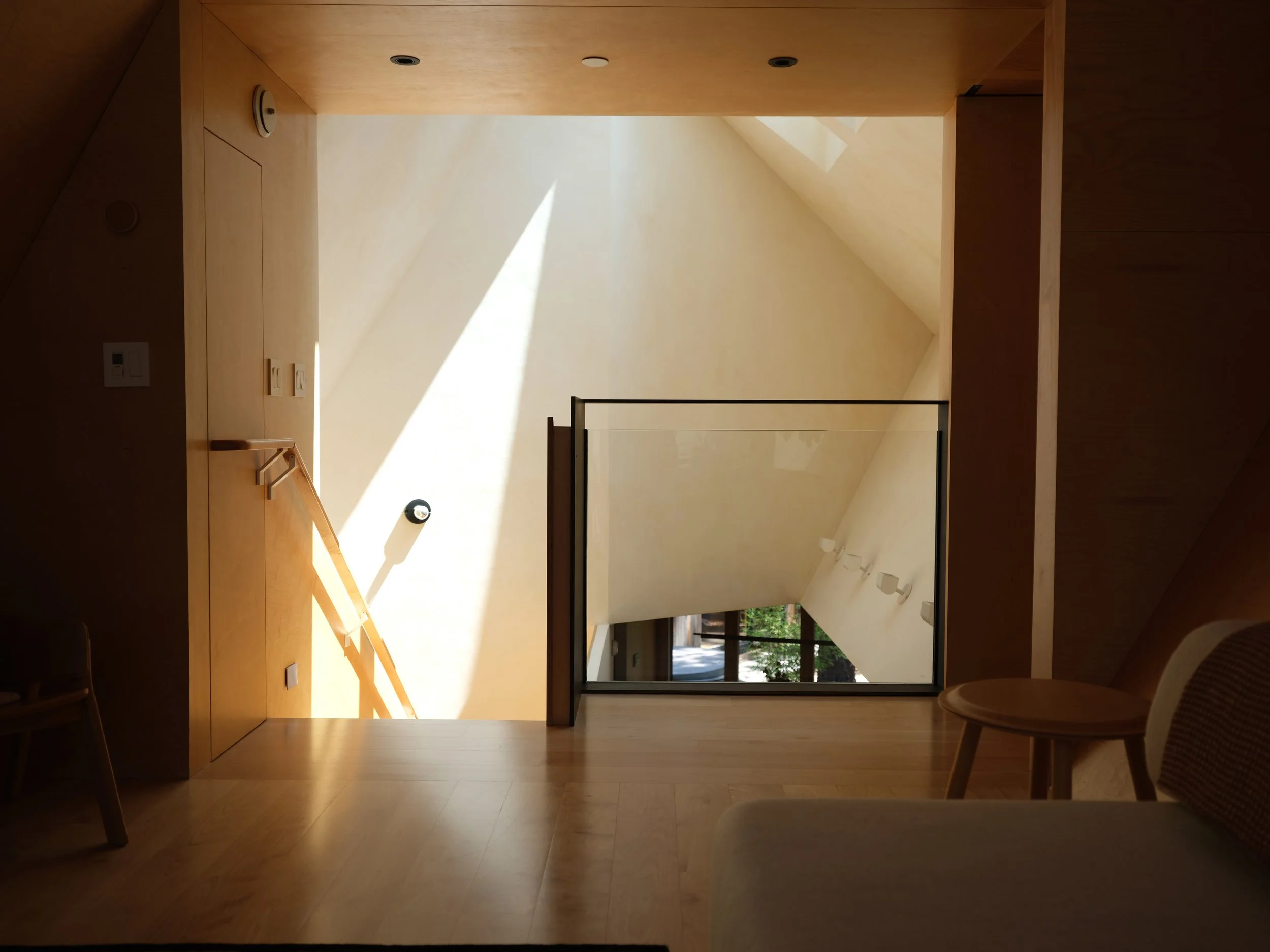
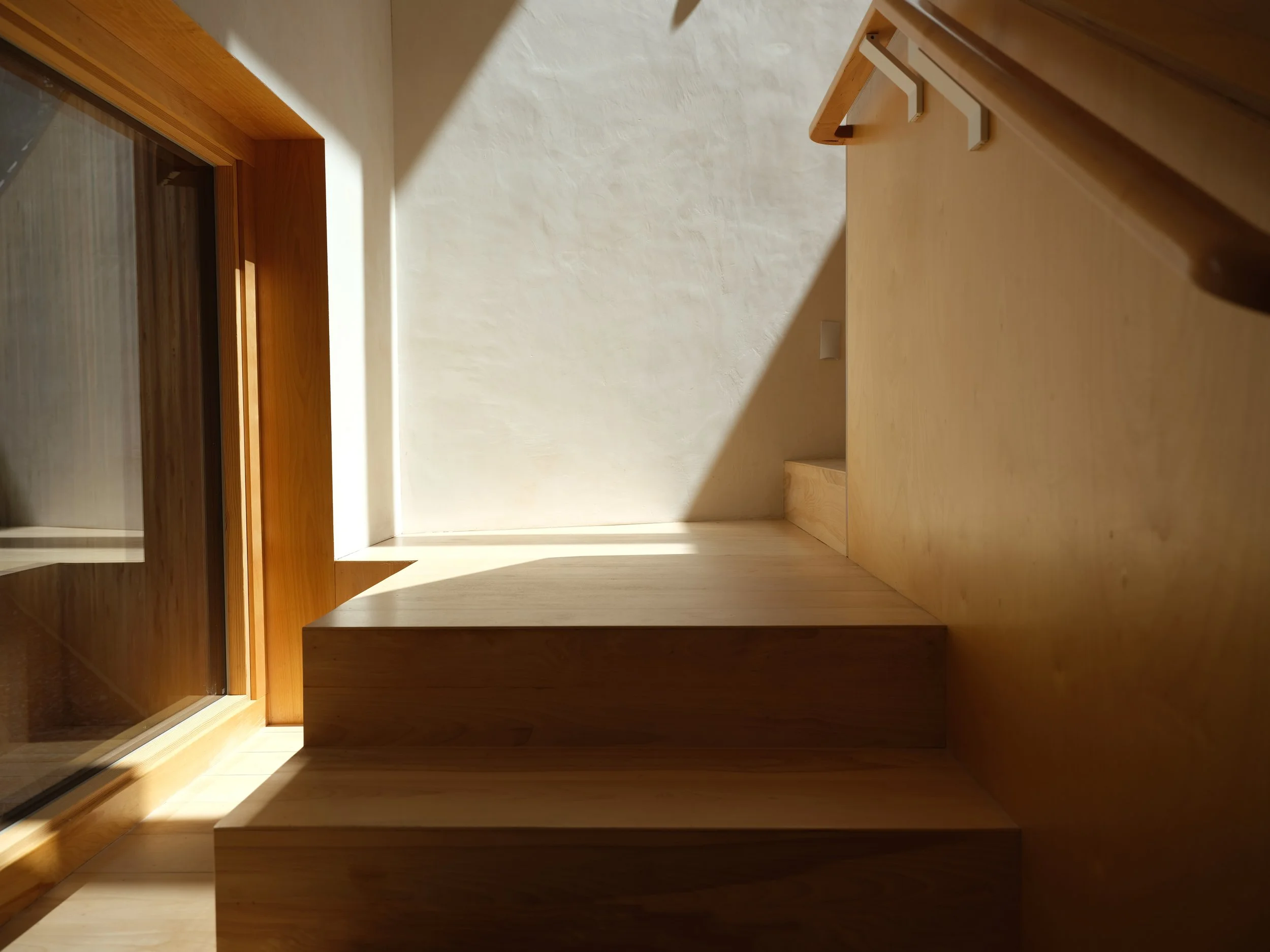
Upon entering, two defining datums emerge: an 18-inch base line and a continuous eight-foot wall height. Elements of inhabitation — the fireplace, media center, and dining bench — occupy the lower datum, while the roof structure rests above. Between floor and roof, white walls fold and unfold through the house, guiding movement and framing moments of light, much like a path winding through the forest itself.
Lighthus resists the notion of architecture as destination. Instead, it embraces the idea of journey — one that distances the familiar and invites contemplation of the unfamiliar. Here, movement, light, and landscape unfold gradually through experience.
A place where nature shapes the house, the house shapes light, and light shapes the way space is inhabited.
In essence, it is the environment that shapes us.